Appearance
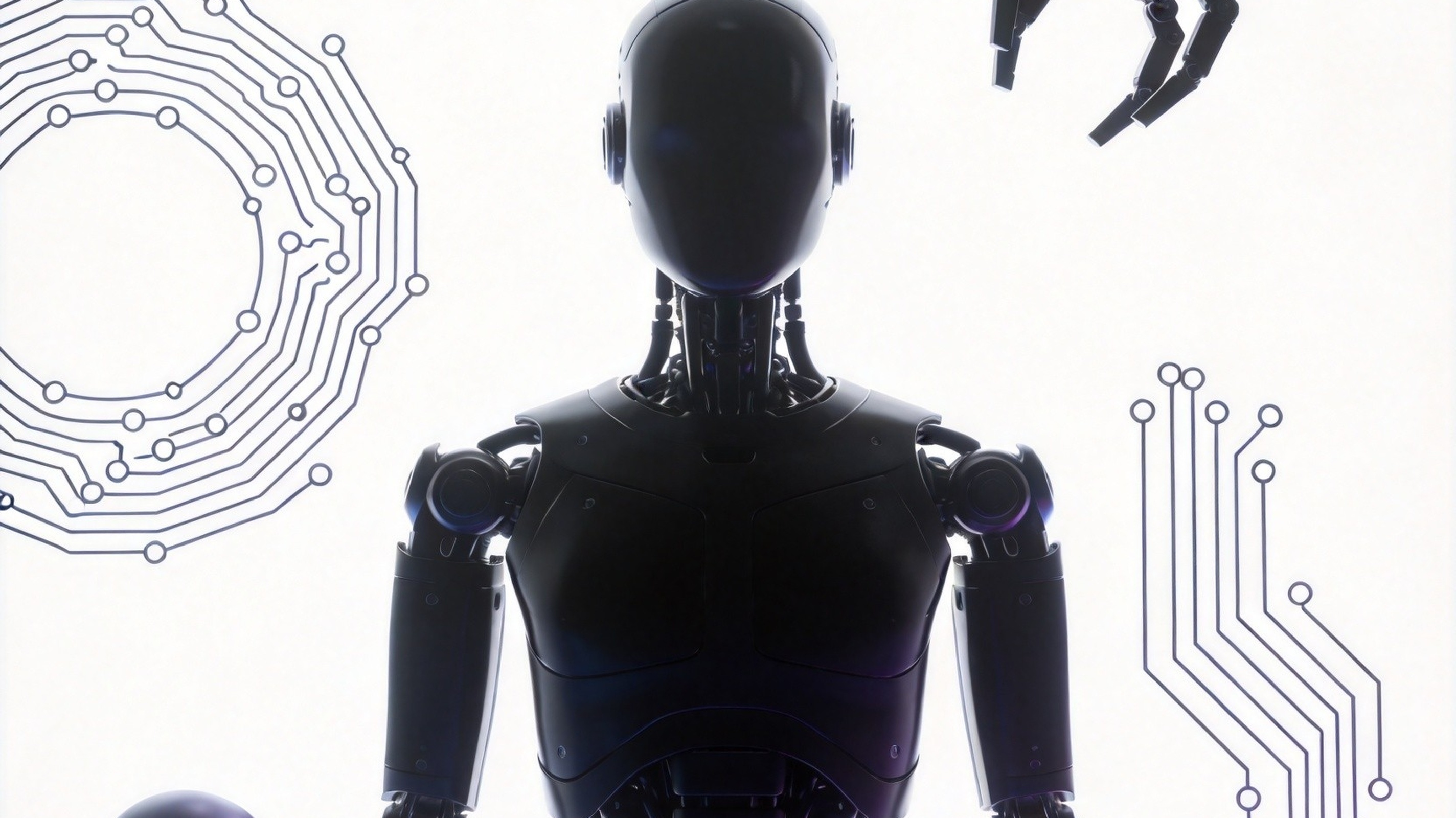
Gemini Robotics ER 2: Google's Physical AI Revolution — Everything You Need to Know
Gemini Robotics ER 2 is Google DeepMind's most capable embodied reasoning model, purpose-built to serve as the "high-level brain" for the next generation of intelligent robots. Released on July 30, 2026, as part of the Gemini Robotics 2 family, ER 2 enables robots to perceive the physical world through continuous video, reason about multi-step tasks lasting several minutes, collaborate with other robots in real time, and self-correct when things go wrong — all while streaming through a bidirectional low-latency API. For the first time, physical AI is no longer a lab experiment; it is becoming deployable infrastructure. And through Nolvia, accessing this groundbreaking technology has never been simpler.
Table of Contents
- What Is Gemini Robotics ER 2?
- The Gemini Robotics 2 Family: Three Models, One Vision
- Key Features of Gemini Robotics ER 2
- Real-World Applications
- How Gemini Robotics ER 2 Compares to Other Robotics AI Solutions
- The Future of Physical AI and Embodied Intelligence
- How to Access Gemini Robotics ER 2 via Nolvia
- FAQs
What Is Gemini Robotics ER 2?
Gemini Robotics ER 2 (Embodied Reasoning 2) is a vision-language model (VLM) developed by Google DeepMind, specifically engineered to power robotic intelligence in the physical world. Unlike traditional chatbot or text-based AI models, ER 2 is designed to interpret continuous video streams, understand spatial relationships, plan complex multi-step physical tasks, and coordinate actions across multiple robots simultaneously.
ER 2 sits at the top of the Gemini Robotics 2 architecture as the reasoning and orchestration layer. It doesn't directly control motors or joints — instead, it processes user instructions, observes the environment through cameras and sensors, breaks tasks into hundreds of sequential decisions, and dispatches commands to lower-level vision-language-action (VLA) models that execute the physical movements.
Think of it this way: if the VLA model is the robot's spinal cord, controlling reflexes and muscle movement, then Gemini Robotics ER 2 is the prefrontal cortex — the part that plans, reasons, adapts, and decides.
Technically, ER 2 is built on top of the Gemini 3.5 Flash architecture with specialized enhancements for spatial reasoning, video understanding, progress tracking, and multi-agent orchestration. It accepts text, images, video, and audio as inputs, and produces text output including function calls, navigation commands, and tool invocations. The model supports a 128,000-token context window with up to 65,536 output tokens — substantial enough to maintain awareness of long, complex task sequences.
ER 2 is available in two endpoints:
| Endpoint | Code | Purpose |
|---|---|---|
| Standard | gemini-robotics-er-2-preview | Full reasoning with spatial reasoning, video analysis, multi-robot orchestration |
| Streaming | gemini-robotics-er-2-streaming-preview | Optimized for real-time bidirectional streaming via Gemini Live API, designed for latency-sensitive robotic tasks |
The Gemini Robotics 2 Family: Three Models, One Vision
Gemini Robotics ER 2 does not operate alone. It is part of a three-model system announced together on July 30, 2026:
Gemini Robotics ER 2 — The embodied reasoning model. Acts as the robot's high-level brain, handling task planning, environmental understanding, human communication, and multi-robot coordination. Available via Google AI Studio and the Gemini API.
Gemini Robotics 2 — The vision-language-action (VLA) model. Converts vision and language inputs into motor control commands. Capable of controlling full humanoid robots from feet to fingertips, including advanced dexterous manipulation with multi-fingered hands and standard grippers. Available to early-access partners.
Gemini Robotics On-Device 2 — The efficient on-device VLA model. Runs locally on robotic hardware without cloud connectivity. Can adapt to entirely new robot embodiments in just a few hours using fewer than 200 examples. Available to early-access partners.
Together, these three models form a complete intelligence stack: ER 2 decides what to do, the VLA model decides how to move, and the On-Device model ensures fast, local execution even without internet access.
Key Features of Gemini Robotics ER 2
Continuous Video Understanding
Perhaps the most significant leap in ER 2 is the ability to reason over continuous live video feeds rather than static frames. This unlocks two critical capabilities:
Progress Classification: The model can sort each frame of a video stream into one of five completion bands (0–20%, 20–40%, 40–60%, 60–80%, 80–100%), allowing robots to track whether a task step is finished, still in progress, or has failed. Google reports 57.4% accuracy on this task — a starting point that already enables meaningful autonomy improvements.
Moment Finding: ER 2 can pinpoint the exact frame where a critical event occurs — such as the moment a cup is full enough to stop pouring. Google reports 91.3% accuracy with a mean error of just 0.96 seconds, at roughly four times the execution speed of much larger models.
This continuous perception eliminates the "stop-think-act" cycle that has historically limited robot autonomy. Instead, ER 2 can reason about the next step while the robot is still executing the current one, dramatically reducing idle time.
Multi-Robot Collaboration
ER 2 introduces native support for multi-robot collaboration — different types of robots sharing a semantic understanding of a task and handing work between them dynamically.
In demonstrations, ER 2 coordinated an Apptronik Apollo 2 humanoid robot with a Franka Duo bi-arm platform to complete tasks neither could handle alone. In another demo, ER 2 orchestrated Boston Dynamics' Spot robot, driving its navigation and manipulator APIs to fetch objects based on spoken natural-language commands.
This capability is transformative for real-world environments where no single robot form factor can handle every task. A wheeled robot might handle transport while a humanoid handles manipulation — and ER 2 manages the handoffs seamlessly.
Agentic Reasoning and Tool Use
ER 2 is not just a passive observer — it is an agent. The model can:
- Call Google Search mid-task to gather real-time information
- Invoke developer-defined custom functions as tools
- Interface with navigation APIs, manipulator controls, and external systems
- Plan task sequences lasting several minutes involving hundreds of individual decisions
- Self-correct when a step fails, retrying or replanning without restarting the entire workflow
This agentic architecture means robots can handle genuinely open-ended tasks rather than only pre-programmed sequences.
Streaming for Real-Time Control
The streaming endpoint (gemini-robotics-er-2-streaming-preview) connects to the Gemini Live API's bidirectional streaming interface. This enables:
- Continuous audio and video input processing
- Sub-second inference latency for time-sensitive physical tasks
- Real-time function calling without round-trip delays
- Low-latency robot control suitable for dynamic environments
For robotics, where milliseconds matter between perception and action, this streaming capability is essential.
Safety: The ASIMOV-Agentic Benchmark
Google introduced a new robotics safety benchmark called ASIMOV-Agentic alongside ER 2. In laboratory tests, ER 2 detected a person entering a robot's working area and directed the robot to place down objects and move into a safe pose — resuming only after the person left.
Google states that ER 2 is its safest robotics model to date, particularly in instruction following and human avoidance. The model is designed to recognize uncertain situations and refuse to execute commands that pose safety risks.
Real-World Applications
Manufacturing and Industrial Automation
Gemini Robotics ER 2 is poised to transform manufacturing floors where flexibility matters. Traditional industrial robots excel at repetitive, pre-programmed tasks but struggle with variation. ER 2 enables robots that can:
- Handle mixed-product assembly lines where tasks change between units
- Perform quality inspection by watching production in real time and detecting anomalies
- Read instruments — pressure gauges, digital displays, linear scales, rulers, and liquid thermometers — across 10+ instrument types
- Adapt to new products or workflows without extensive reprogramming
Google's partners like Apptronik (with the Apollo 2 humanoid) and Agile Robots are actively exploring these industrial use cases.
Logistics and Warehouse Operations
The ability to coordinate multiple robots makes ER 2 particularly compelling for logistics:
- Collaborative picking and packing: A humanoid robot handles shelf retrieval while a wheeled platform manages transport
- Trailer unloading: Whole-body control enables robots to navigate confined spaces, bend, reach, and sort
- Dynamic task allocation: ER 2 can assign roles, track progress, and synchronize actions among a fleet of robots
These capabilities directly address the industry's push toward flexible fulfillment centers that can handle the enormous variety of e-commerce orders.
Service Robots and Home Robotics
Looking further ahead, ER 2's combination of natural-language understanding, video-based perception, and adaptive planning opens doors for service robots:
- Household chores: tidying rooms, loading dishwashers, folding laundry
- Elder care assistance: fetching items, monitoring environments, responding to voice commands
- Hospitality: guiding visitors, delivering items, managing reception tasks
While movement speed and dexterity still have room for improvement, the reasoning and planning layer that ER 2 provides is the critical missing piece that makes these applications feasible.
Facility Inspection and Maintenance
Building on instrument reading capabilities introduced in ER 1.6 (developed with Boston Dynamics), ER 2 extends to digital displays, linear scales, and multiple new instrument types. This makes it suitable for:
- Automated facility inspection rounds
- Monitoring equipment health in power plants, chemical facilities, and water treatment plants
- Detecting anomalies and triggering maintenance workflows autonomously
How Gemini Robotics ER 2 Compares to Other Robotics AI Solutions
The robotics AI landscape is competitive and evolving rapidly. Here's how Gemini Robotics ER 2 stacks up:
| Feature | Gemini Robotics ER 2 | NVIDIA Isaac Platform | OpenAI Robotics Models |
|---|---|---|---|
| Model type | Embodied reasoning VLM | Training platform + simulation | General foundation model research |
| Real-time video reasoning | ✅ Native continuous video | ❌ Requires custom integration | 🔬 Research stage |
| Multi-robot collaboration | ✅ Native semantic sharing | ⚠️ Fleet management only | ❌ Not demonstrated |
| Progress tracking | ✅ 57.4% accuracy, 5 bands | ❌ Not built-in | ❌ Not available |
| Moment finding | ✅ 91.3% accuracy, <1s error | ❌ Not built-in | ❌ Not available |
| Streaming/low-latency | ✅ Bidirectional Live API | ✅ Edge deployment | ❌ Not available |
| Multi-embodiment support | ✅ Hours to adapt (On-Device 2) | ✅ Broad hardware support | 🔬 Limited demonstrations |
| Availability | ✅ Google AI Studio + API | ✅ Commercial platform | ❌ Not publicly available |
| Safety benchmark | ✅ ASIMOV-Agentic | ⚠️ General safety framework | ⚠️ General safety research |
Google's key differentiator is that ER 2 is not just a model — it is a reasoning layer designed to work across any robot hardware. While NVIDIA provides excellent training infrastructure and OpenAI explores general robotics foundation models, Google is the only frontier lab shipping a dedicated embodied reasoning model through a public API that any developer can access today.
The Future of Physical AI and Embodied Intelligence
The launch of Gemini Robotics ER 2 represents a watershed moment in the convergence of AI and the physical world. Several trends are now clearly visible:
From pre-programmed to adaptive: The era of robots that can only repeat fixed sequences is ending. ER 2 demonstrates that robots can understand natural language, reason about novel situations, and adapt their behavior in real time. This shift from "programmed automation" to "intelligent autonomy" is the most fundamental change in robotics since the industrial robot arm itself.
From single robots to robot teams: Multi-robot collaboration, enabled natively by ER 2, mirrors how human teams work. Instead of one super-robot that does everything, the future is fleets of specialized robots that coordinate intelligently. This approach is more robust, more scalable, and more practical for real-world complexity.
From cloud-only to edge-hybrid: The combination of ER 2 (cloud reasoning) with Gemini Robotics On-Device 2 (local execution) creates a hybrid architecture where high-level planning happens in the cloud while time-critical motor control runs locally. This pattern will likely become the standard for embodied AI systems.
From custom integration to platform access: By making ER 2 available through Google AI Studio and the Gemini API, Google is democratizing access to cutting-edge robotics AI. Small teams and startups no longer need to build reasoning systems from scratch — they can build on Google's foundation and focus on their specific applications.
The roadmap ahead includes improved movement speed, higher dexterity success rates (especially for multi-fingered manipulation), broader hardware partnerships, and deeper integration with enterprise systems. As Carolina Parada, VP of Robotics at DeepMind, stated: "Our goal is to bring AI into the physical world and build a layer of intelligence that can be used by all robots."
For businesses exploring robotics automation, the message is clear: the intelligence layer is arriving faster than the hardware. The strategic advantage will go to organizations that start building on these platforms now.
How to Access Gemini Robotics ER 2 via Nolvia
Accessing Gemini Robotics ER 2 doesn't have to be complicated. While Google offers the model through its own AI Studio and Gemini API, managing multiple AI providers, handling authentication, tracking usage, and optimizing costs across different robotics projects can quickly become overwhelming.
This is where Nolvia changes the game.
Nolvia is an intelligent AI model aggregator platform that provides unified access to the world's leading AI models — including Gemini Robotics ER 2 — through a single, streamlined interface. Instead of juggling separate accounts, API keys, and billing systems for each provider, Nolvia brings everything together.
Why Access Gemini Robotics ER 2 Through Nolvia?
- Unified API Access: Call Gemini Robotics ER 2 alongside dozens of other models from OpenAI, Anthropic, Meta, xAI, and more — all through one consistent API
- Simplified Authentication: One account, one API key, access to everything. No need to set up separate Google Cloud projects or manage OAuth flows for each robotics model
- Intelligent Routing: Nolvia's smart routing automatically directs your requests to the optimal model and endpoint, ensuring the best performance for your robotics application
- Cost Optimization: Compare pricing across providers, track token usage in real time, and optimize spending across your entire AI portfolio from a single dashboard
- Seamless Integration: Switch between Gemini Robotics ER 2's standard and streaming endpoints without code changes — Nolvia handles the abstraction layer
- Reliability and Uptime: Nolvia provides enterprise-grade reliability with automatic failover, so your robotics applications stay operational even if a single provider experiences issues
Getting Started
- Sign up at Nolvia to create your account
- Sign in to your Nolvia account
- Start building — call Gemini Robotics ER 2 through Nolvia's unified API endpoint
- Explore other models — test Gemini Robotics 2, Gemini 4, GPT-5.6, or any other model without leaving the platform
Whether you're building the next generation of warehouse robots, developing service robots for healthcare, or exploring novel embodied AI applications, Nolvia gives you the fastest path from idea to deployment.
Ready to build with Gemini Robotics ER 2? Get started with Nolvia today and unlock unified access to the world's most advanced AI models — all through a single platform.
FAQs
What exactly is Gemini Robotics ER 2 and how is it different from regular Gemini models?
Gemini Robotics ER 2 is a specialized embodied reasoning model built on the Gemini 3.5 Flash architecture. Unlike regular Gemini models designed for text, chat, or general multimodal tasks, ER 2 is specifically engineered for robotics. It processes continuous video feeds, reasons about physical-world tasks, tracks task progress in real time, coordinates multiple robots, and interfaces with lower-level motor control systems. It is not a chatbot in a robot's body — it is a dedicated reasoning layer for physical AI.
Can Gemini Robotics ER 2 control any type of robot?
ER 2 itself is the reasoning and orchestration layer — it doesn't directly control motors. It works in conjunction with vision-language-action (VLA) models like Gemini Robotics 2, which translate reasoning into physical movements. Google has demonstrated ER 2 working with Apptronik's Apollo 2 humanoid, Franka Duo bi-arm platforms, and Boston Dynamics' Spot. The companion On-Device 2 model can adapt to new robot embodiments in hours using fewer than 200 examples. So while ER 2 is hardware-agnostic at the reasoning level, the physical execution depends on compatible VLA models and robot hardware.
How does multi-robot collaboration work in ER 2?
Multi-robot collaboration in ER 2 works through shared semantic understanding. Different robots — even of different types (e.g., a humanoid and a wheeled platform) — share their perception of the environment and task state through ER 2's orchestration layer. ER 2 can assign roles, divide work, track whether one stage is complete before another begins, and handle handoffs between robots. This allows heterogeneous robot teams to cooperate on complex workflows that no single robot could handle alone.
Is Gemini Robotics ER 2 available to the public right now?
Yes, partially. Gemini Robotics ER 2 is available through Google AI Studio and the Gemini API for developers to experiment with the reasoning model. It is also in private preview on the Gemini Enterprise Agent Platform. However, the companion VLA model (Gemini Robotics 2) and the On-Device model are only available to selected early-access partners. For the easiest access to ER 2, you can use Nolvia, which provides unified API access without needing to set up separate Google Cloud accounts.
What are the current limitations of Gemini Robotics ER 2?
Several limitations are worth noting. Movement speed of robots controlled by the system still needs improvement — Google acknowledges robots are slower than human pace. Multi-fingered dexterous manipulation success rates range from 32% to 92% depending on the task, with complex tasks like screwing in a light bulb still challenging. Progress classification accuracy sits at 57.4%, which is a starting point but not yet reliable enough for fully autonomous operation without oversight. The model is also restricted from safety-critical applications like healthcare decision-making and autonomous transportation.
How does the streaming endpoint differ from the standard endpoint?
The standard endpoint (gemini-robotics-er-2-preview) provides full reasoning capabilities including spatial reasoning, video analysis, and multi-robot orchestration — ideal for tasks where slight latency is acceptable. The streaming endpoint (gemini-robotics-er-2-streaming-preview) is optimized for real-time bidirectional communication via the Gemini Live API, enabling continuous audio and video processing with sub-second latency. Use the streaming endpoint for latency-sensitive tasks like real-time physical control, and the standard endpoint for higher-level planning and analysis.
What safety measures does Gemini Robotics ER 2 include?
Google introduced the ASIMOV-Agentic safety benchmark alongside ER 2. Key safety features include: the ability to detect humans entering a robot's workspace and direct the robot to enter a safe state; recognition of uncertain situations with the ability to refuse risky commands; improved instruction following to prevent unintended actions; and human avoidance behaviors that outperform previous models. Google describes ER 2 as its safest robotics model, though real-world safety ultimately depends on the full system implementation including hardware safeguards.
How can I use Gemini Robotics ER 2 through Nolvia?
Using Gemini Robotics ER 2 through Nolvia is straightforward. Sign up for a Nolvia account, and start using the model directly in the web workspace. Nolvia handles billing and model access — so you can focus on your robotics application rather than managing infrastructure. Nolvia also gives you access to dozens of other AI models through the same interface, making it easy to compare, test, and combine different models for your use case.
Explore the future of AI with Nolvia — your unified gateway to the world's most powerful AI models, including Gemini Robotics ER 2, Gemini 4, GPT-5.6, Claude, and dozens more. Get started today.